A Circular Line neighborhood balancing old-town character with everyday value
Zhonghe Neighborhood Guide
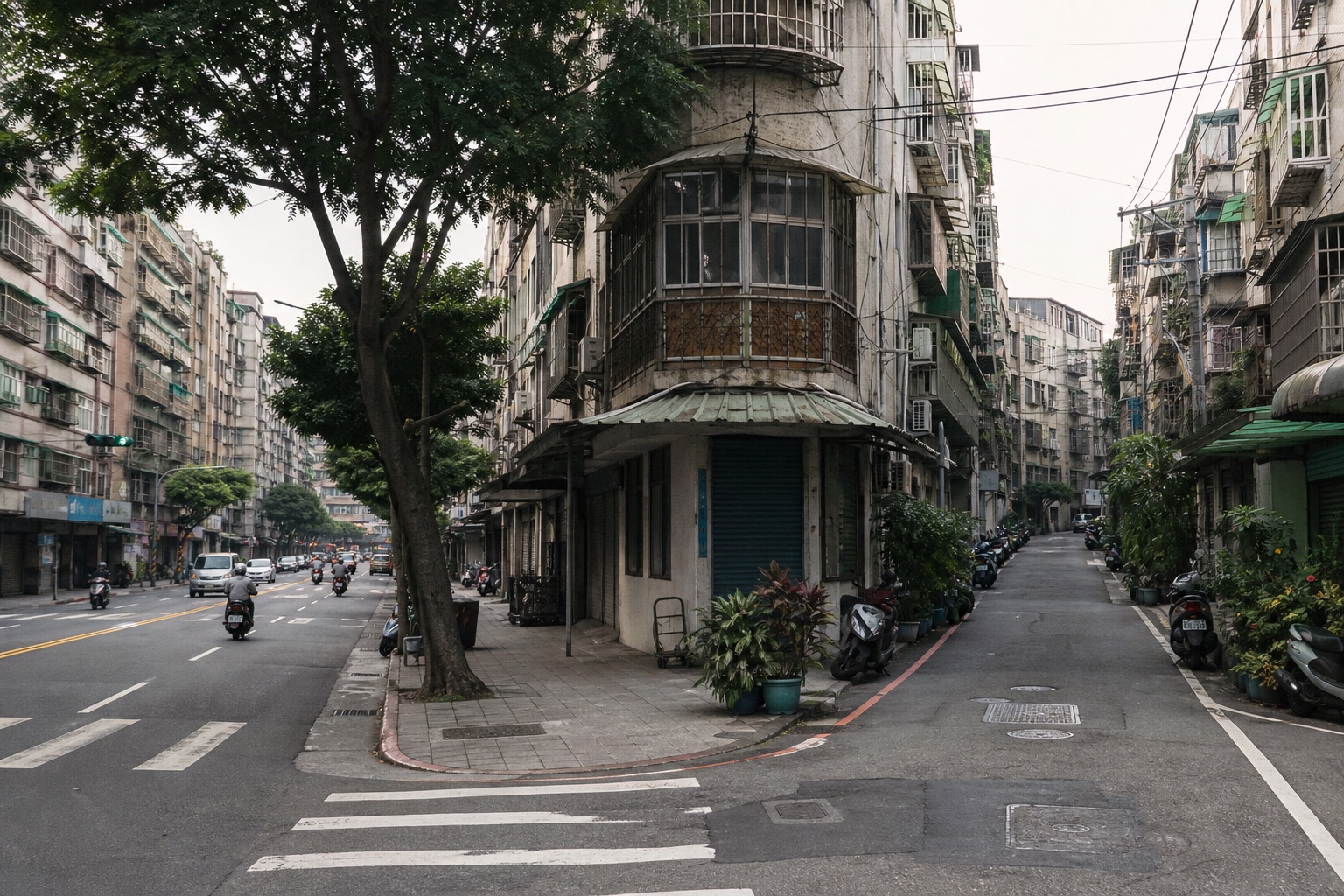
Zhonghe is one of New Taipei's most densely populated districts, with a classic old-town layout — narrow lanes packed with small shops tucked between residential buildings. The Zhonghe-Xinlu Line's Nanshijiao (O01) and Jingan (O02) stations, plus the Circular Line's Jingan (Y11), Zhonghe (Y12), Qiaohe (Y13), and Zhongyuan (Y14) stations give the district solid MRT coverage — Jingan Station in particular is an important transfer point where the two lines meet.
Zhonghe's everyday feel is distinctly local: Xingnan Night Market is the neighborhood market residents actually shop at, and the Hongludi Nanshan Fude Temple is a popular weekend spot for a short hike and night views over the city. Number Four Park, straddling the Zhonghe–Yonghe border (its formal name is the 823 Memorial Park), is one of the few large green spaces in the area and draws families on weekends.
Prices in Zhonghe generally run below Banqiao's and close to Tucheng's, but because so much of the housing stock is older apartment buildings, buyers need to spend extra time assessing condition and building management. For buyers who want an authentic local feel on a mid-range budget, Zhonghe offers solid value.
Who to ask about buying here
Looking to buy in Tucheng, Banqiao, or Zhonghe? Start with Joanna Su.
If you want to buy in Zhonghe, Joanna Su can help you compare its neighborhoods, commute, and housing conditions before you decide whether to view homes.
- Focus
- Tucheng District, Banqiao District, Zhonghe District
- What happens first
- Clarify your needs, budget, and neighborhood before comparing homes.
- Affiliation
- Banqiao Jiangcui Northside Linghang Branch
- Stations
- 6
- District
- New Taipei City
Good for
- Owner-occupier buyers on a mid-range budget who value good value for money
- People who enjoy the character and local culture of an old-town neighborhood
- Commuters who want the flexibility of a two-line MRT transfer point
- Families who want easy access to green space for weekend outings
What's great
- More affordable than Banqiao, in a similar range to Tucheng, with solid value
- Jingan Station's two-line transfer gives real commuting flexibility
- Dense local amenities — markets, street food, and night markets woven into the neighborhood
- Number Four Park and Hongludi offer rare access to large green and recreational space
- High population density means something is almost always open
Trade-offs
- A high proportion of older walk-ups means big variation in elevators, parking, and building management
- Some lanes are narrow, making parking difficult
- Urban renewal has moved slowly overall, so building condition varies widely
- The Circular Line's frequency and transfer efficiency aren't as refined as the Blue Line's
MRT neighborhoods
Neighborhoods in Zhonghe
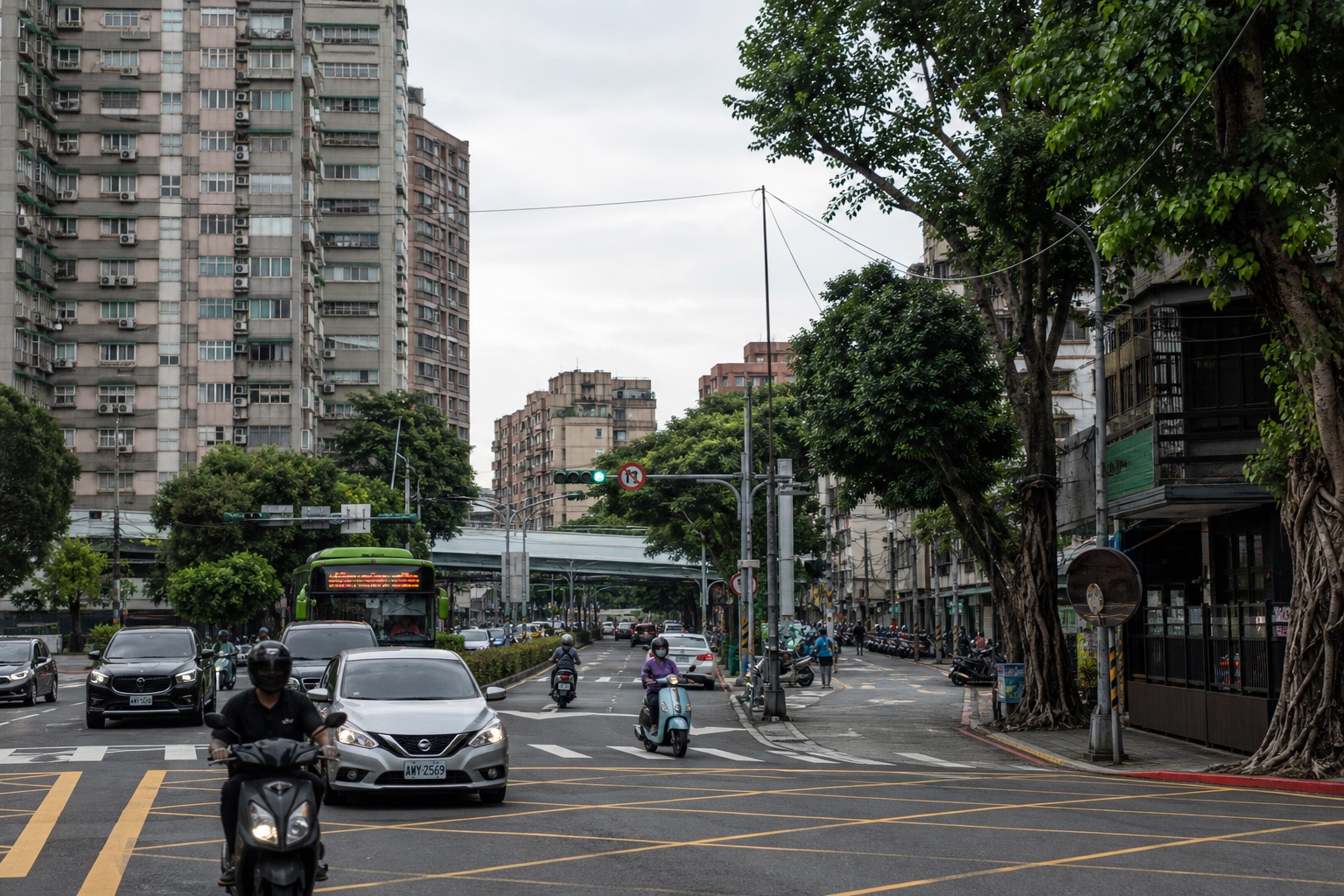
Jing'an
O02Y11A two-line interchange transformed by the arrival of the Circular Line
Jing'an is where the Zhonghe-Xinlu Line meets the Circular Line, and that dual-line status changed the station's standing in Zhonghe entirely once the Circular Line opened. It used to be primarily an exit route toward Guting and Taipei; now it also offers a direct sideways connection into other parts of New Taipei City, which has opened up far more commuting options for residents.
Read the neighborhood analysis →
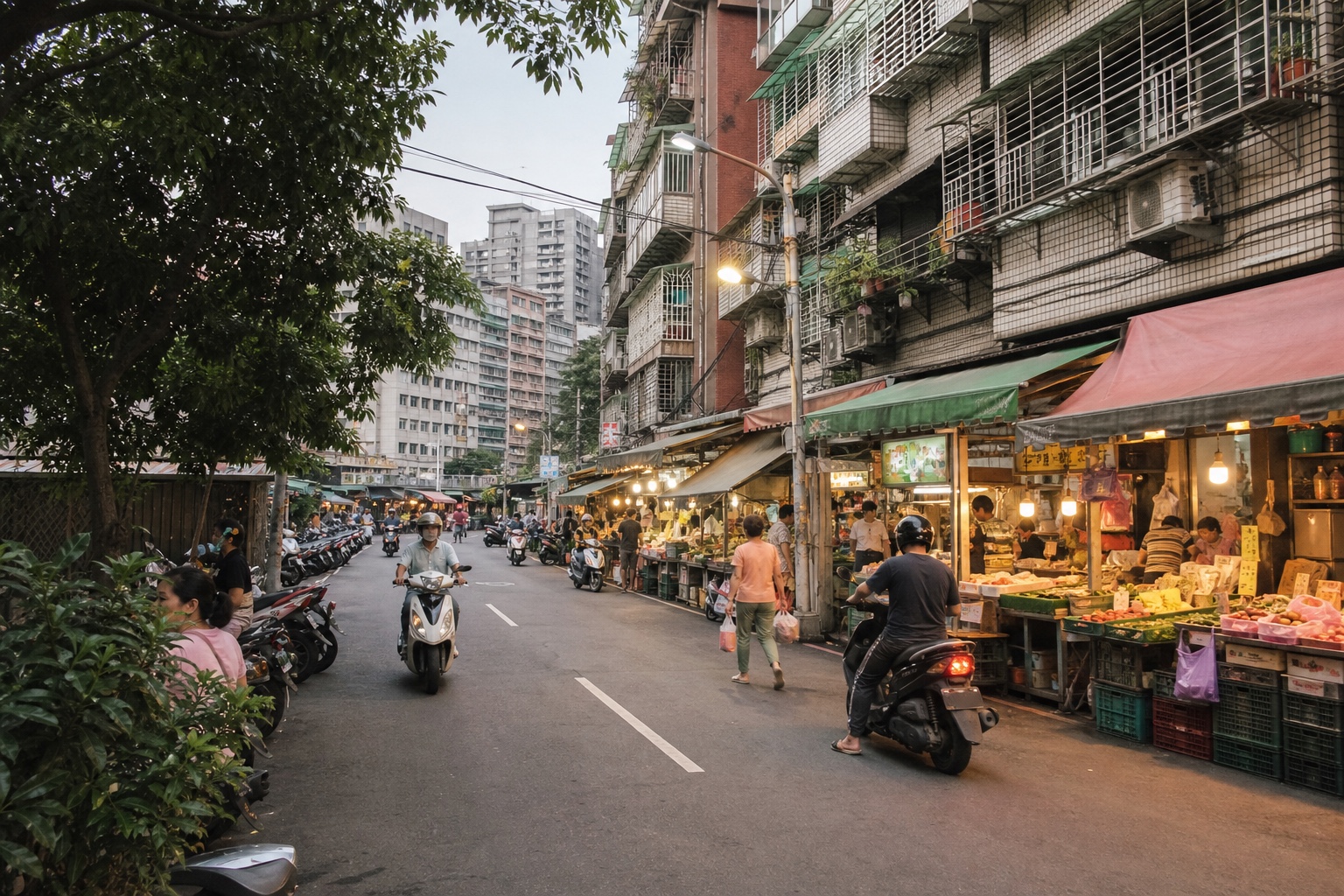
Nanshijiao
O01The Orange Line's terminus, where night markets meet hiking trails
Nanshijiao is the terminus of the Orange Line and one of the most vibrant, lived-in stations in Zhonghe District. The Xingnan Night Market (興南夜市) sits right around the station, packed with food stalls and crowds every evening — a regular weekend destination for locals across the district.
Read the neighborhood analysis →
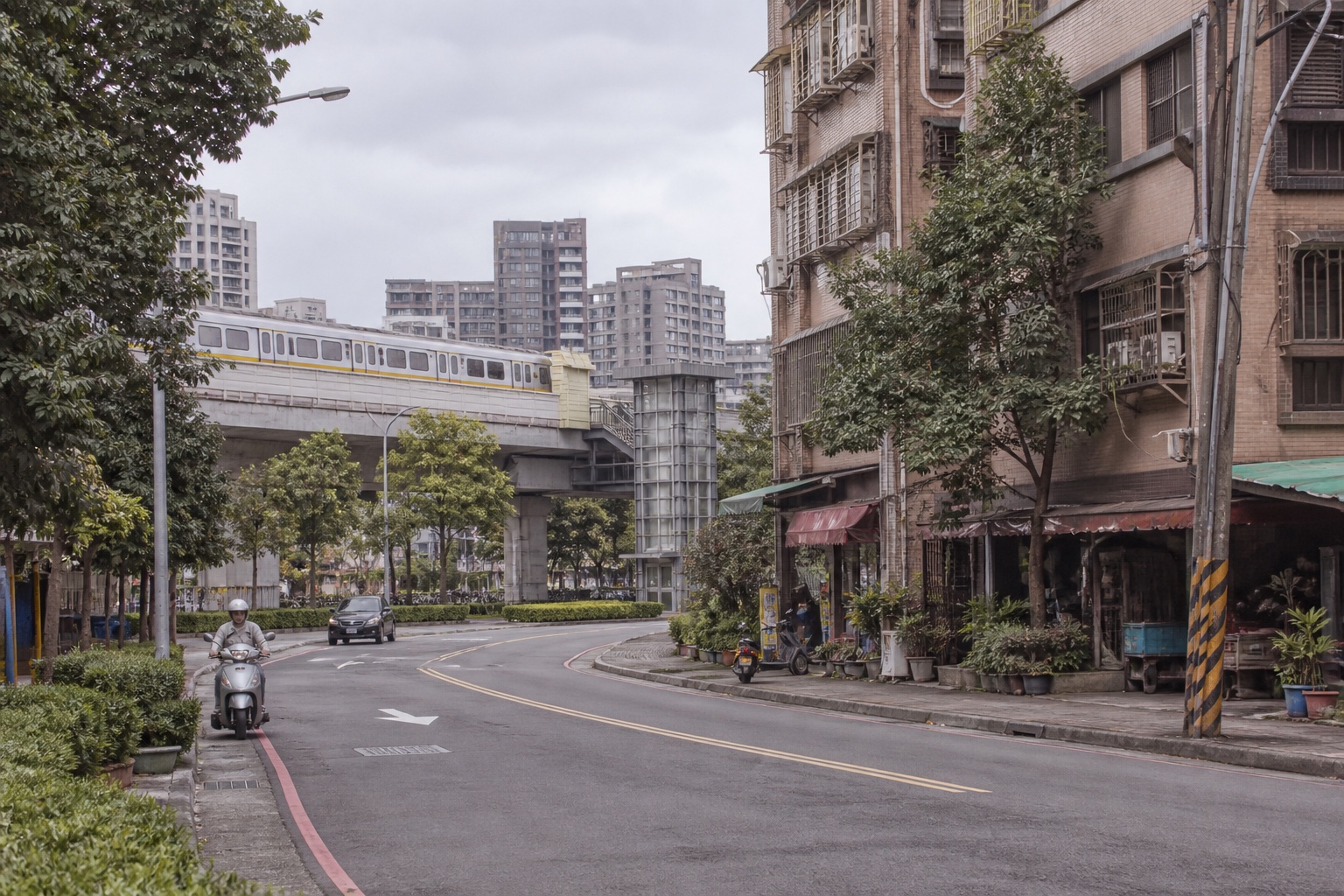
Zhongyuan
Y14A quiet residential stop that got a new lease on life from the Circular Line
Zhongyuan only gained MRT service once the Circular Line opened — before that, residents here relied mostly on buses or scooters. The shift from no rail access to having one is really the defining story of this station, and it's clearly improved commuting flexibility for the neighborhood.
Read the neighborhood analysis →
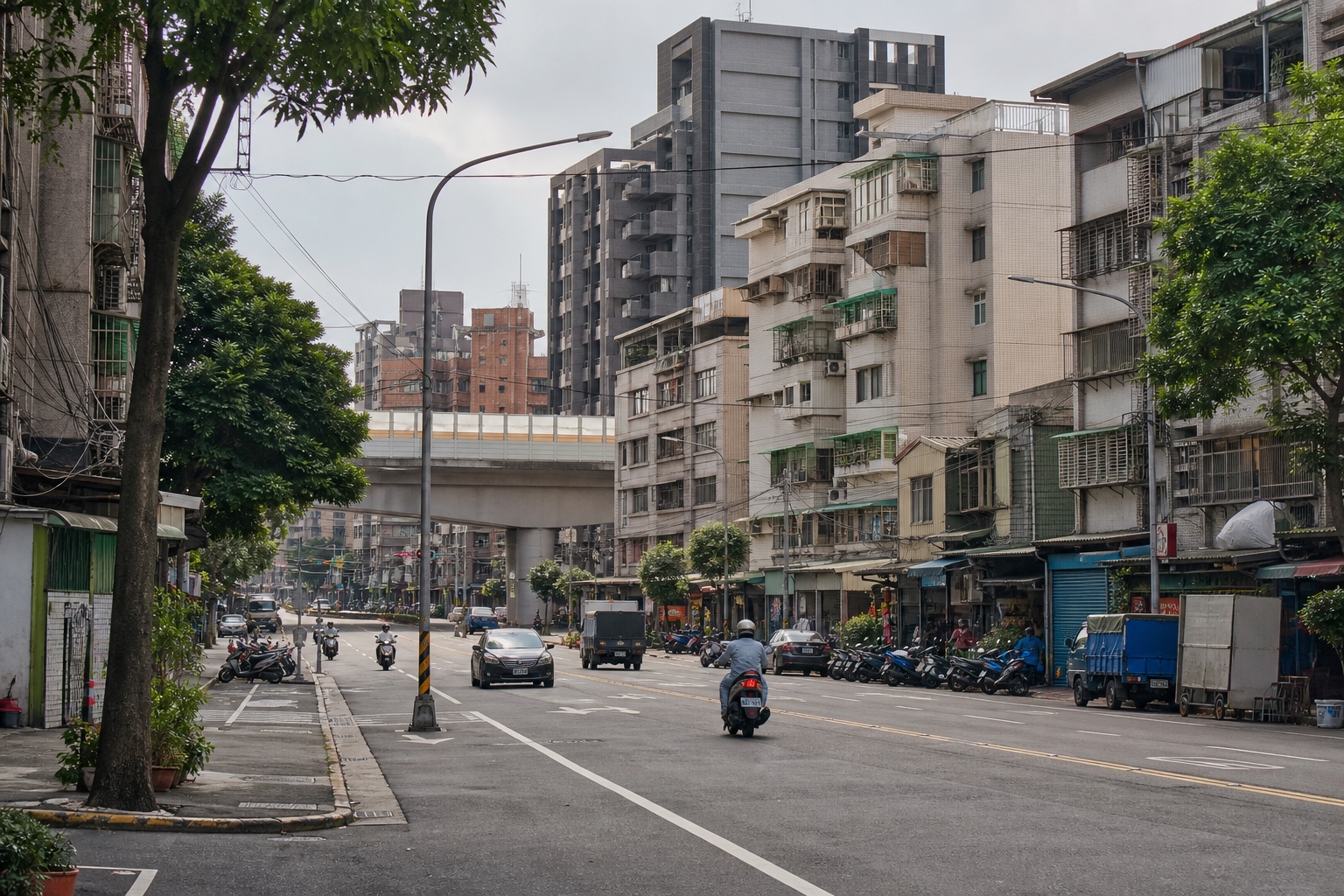
Qiaohe
Y13A quiet Circular Line stop on Zhonghe's outer edge
Qiaohe is another station that only gained rail service once the Circular Line opened, sitting toward the outer edge of Zhonghe with a mostly residential surrounding and a simpler commercial footprint than stations like Jing'an or Nanshijiao. The overall feel here is quiet, suiting people who don't need to be near a busy commercial strip.
Read the neighborhood analysis →
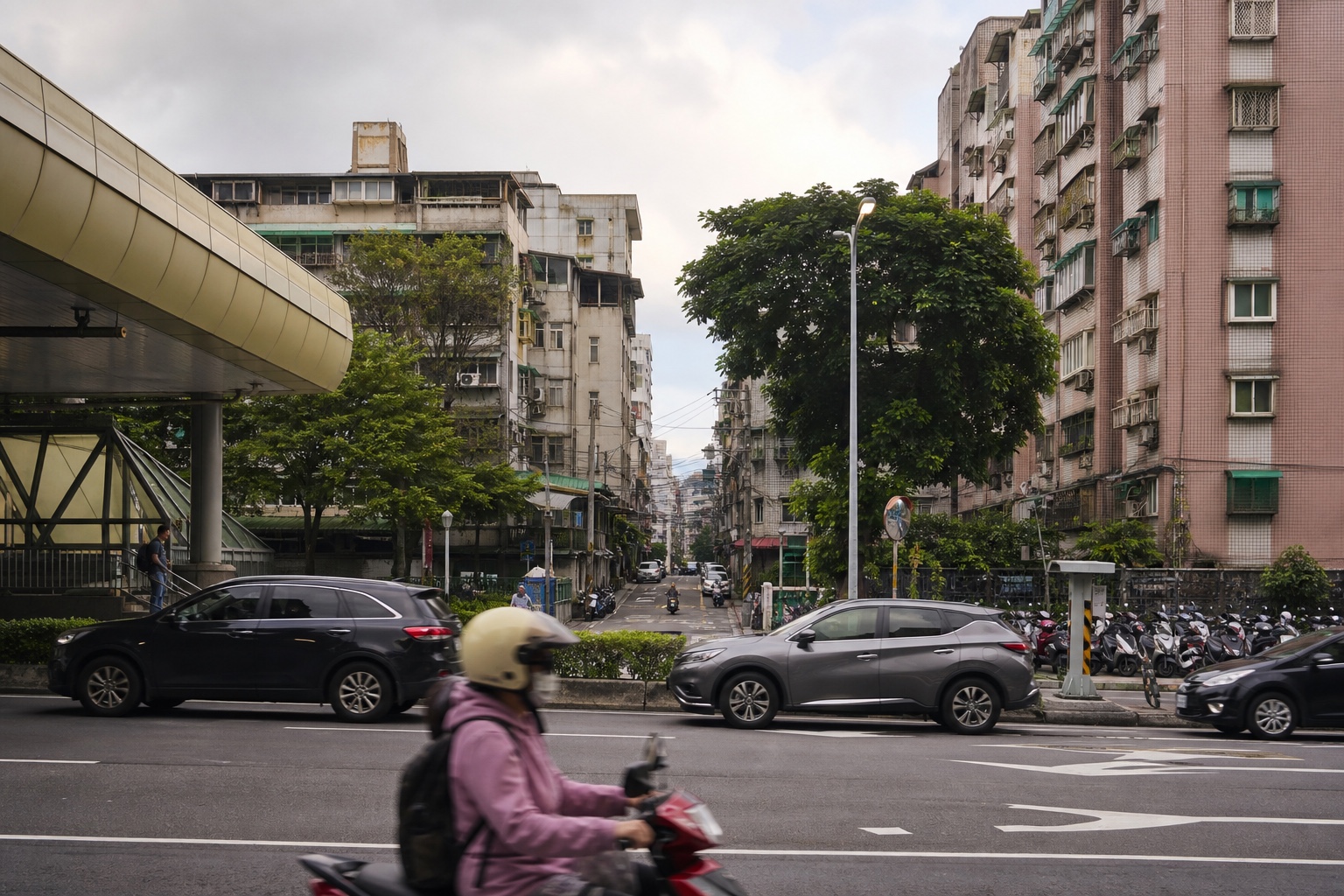
Zhonghe
Y12A Circular Line residential node at the Zhongshan–Jingping crossroads
Zhonghe is Circular Line stop Y12, located at the official station address where Section 2 of Zhongshan Road meets Jingping Road, with one main entrance. It is not a two-line interchange; for the Zhonghe-Xinlu Line, Jing'an Station usually needs to be part of the route plan. The point here is east-west connectivity and local daily life, not an in-station transfer.
Read the neighborhood analysis →
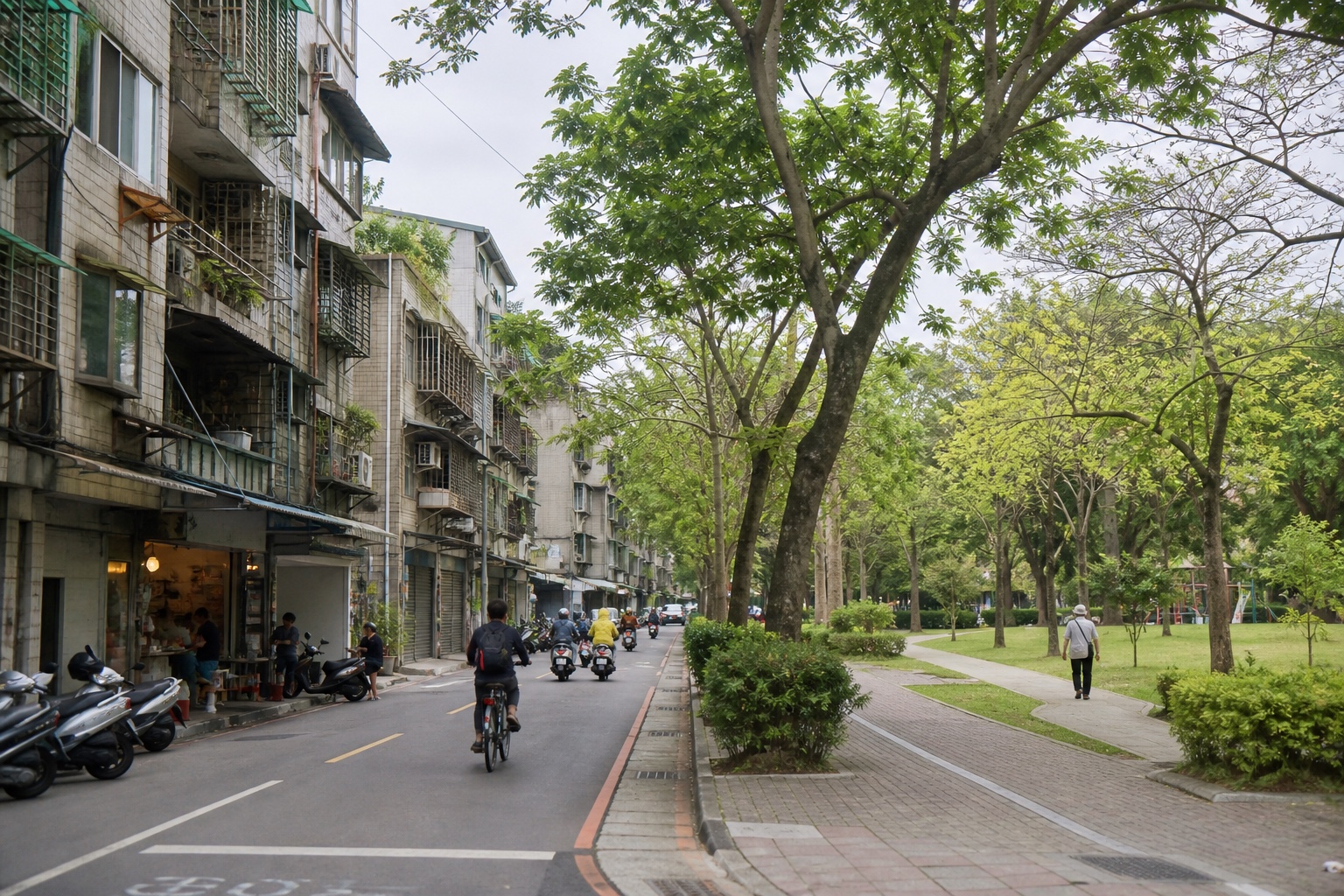
Yongan Market
O03An established neighborhood beside Number Four Park and the National Taiwan Library
Yongan Market is Zhonghe-Xinlu Line stop O03 at No. 388, Zhonghe Road. Its defining lifestyle asset is not the station name itself but Number Four Park and the National Taiwan Library inside it. New Taipei's park information calls the park a representative Zhonghe–Yonghe green space, and the library's own access page says it is about a five-minute walk from Yongan Market Station.
Read the neighborhood analysis →
Getting Around: MRT & Commuting
Zhonghe's MRT coverage comes from the Zhonghe-Xinlu Line and the Circular Line. Nanshijiao (O01) is the southern terminus of the Zhonghe-Xinlu Line, while Jingan Station serves double duty as O02 and Y11 — the district's key transfer point. The Circular Line continues east through Zhonghe (Y12), Qiaohe (Y13), and Zhongyuan (Y14), linking Zhonghe's different pockets.
Taipei Metro's current station-to-station lookup puts Jingan to Guting at about 8 minutes, with reasonably convenient transfers into central Taipei from there. This reference includes train and transfer walking time but excludes waiting and street-level walking. Zhonghe's rail coverage is broad, but Circular Line frequency and transfer flow can still affect the peak-hour experience, so test the route in practice.
- Jingan Station: O02 + Y11 transfer point, Zhonghe's main transit hub
- Nanshijiao Station: southern terminus of the Zhonghe-Xinlu Line, near Xingnan Night Market
- Zhongyuan Station: Circular Line stop near the Zhongyuan residential area
- Qiaohe Station: Circular Line stop, mostly residential amenities
Daily Life & Neighborhood Amenities
Zhonghe's amenities live in its lanes — Xingnan Night Market is the main everyday market near Nanshijiao, with a wide range of affordable street food. Costco Zhonghe covers bulk family shopping needs, and it's one reason many families choose to settle here.
For weekend downtime, the Hongludi Nanshan Fude Temple and Yuanshan Park are popular for a short hike and night views. Number Four Park is where residents go for evening walks and exercise on weekdays. Overall, daily life here feels very grounded and local — though compared to Banqiao, there are fewer upscale dining and department-store options.
Schools & Family Life
Zhonghe has a good number of public elementary and junior high schools, and because population density is high, some of the more sought-after schools are larger in scale. The area around Jingan and Zhonghe stations has long attracted family buyers for its transit access, while the Zhongyuan area is quieter and suits families who prefer a more residential feel.
Number Four Park is a key piece of family life in Zhonghe — it's a sizeable open space, rare for this part of the district, and sees plenty of family activity and exercise on weekends. Overall, family amenities here are solid, but the high living density also means more ambient noise in the lanes than in less dense areas.
Housing Stock & How to Compare
Zhonghe's housing stock is dominated by older apartments and resale mid-rise buildings, with building age generally higher than Banqiao's and urban renewal moving more slowly — so it's common to find units with very different conditions on the same street. Prices run a bit higher near Jingan and Zhonghe stations for the transit access; the Zhongyuan and Qiaohe areas are more purely residential, with steadier pricing.
This page does not publish an undated price band without a reproducible method. Verify real prices with recent comparable records by station, age, property type, floor, and parking.
What's Coming: Future Development
Zhonghe's future development centers mainly on urban renewal of existing buildings and continued refinement of amenities around the Circular Line. Unlike Tucheng, which has a clear tech-park growth story, Zhonghe's progress is more incremental — improving overall living quality through individual building renovations and small amenity upgrades rather than one big catalyst.
For buyers, Zhonghe's practical appeal is its combination of MRT access, established neighborhoods, and green space. That does not make prices or volatility predictable; compare the specific building and current transactions rather than treating the district as a single investment story.
FAQ
Common questions about Zhonghe
Are Zhonghe's older apartments worth buying?
It really depends on the specific unit. Zhonghe's older apartments offer lower total prices and usually good access to daily amenities, but condition and building management can vary a lot even on the same street. When viewing, pay close attention to water damage, structural issues, and how well common areas are maintained — and it helps to compare actual price registration records for similar units in the same building complex.
Is Zhonghe a good fit for retirees?
Zhonghe's dense amenities, relatively affordable cost of living, and recreational spots like Number Four Park and Hongludi make it appealing for retirees. Just be aware that many older buildings lack elevators, which can be a real obstacle for anyone with limited mobility — it's worth prioritizing buildings with elevators or lower-floor units.
Zhonghe or Tucheng — which is better for first-time buyers?
Price ranges are similar, so the choice comes down to lifestyle preference. Zhonghe has denser amenities and a convenient two-line transfer point, but the building stock skews older overall. Tucheng has a slower pace, a stronger community feel, and the long-term growth story of the Dingpu Technology Park. It's worth walking both districts in person to get a feel for each before deciding.
Is it easy to transfer between MRT lines in Zhonghe?
Jingan Station, where the Zhonghe-Xinlu Line meets the Circular Line, makes transfers reasonably convenient and serves as Zhonghe's key node for commuting elsewhere. That said, the Circular Line's overall frequency and transfer flow are still being refined, so it's wise to build in extra time during peak hours rather than cutting connections close.
Related articles
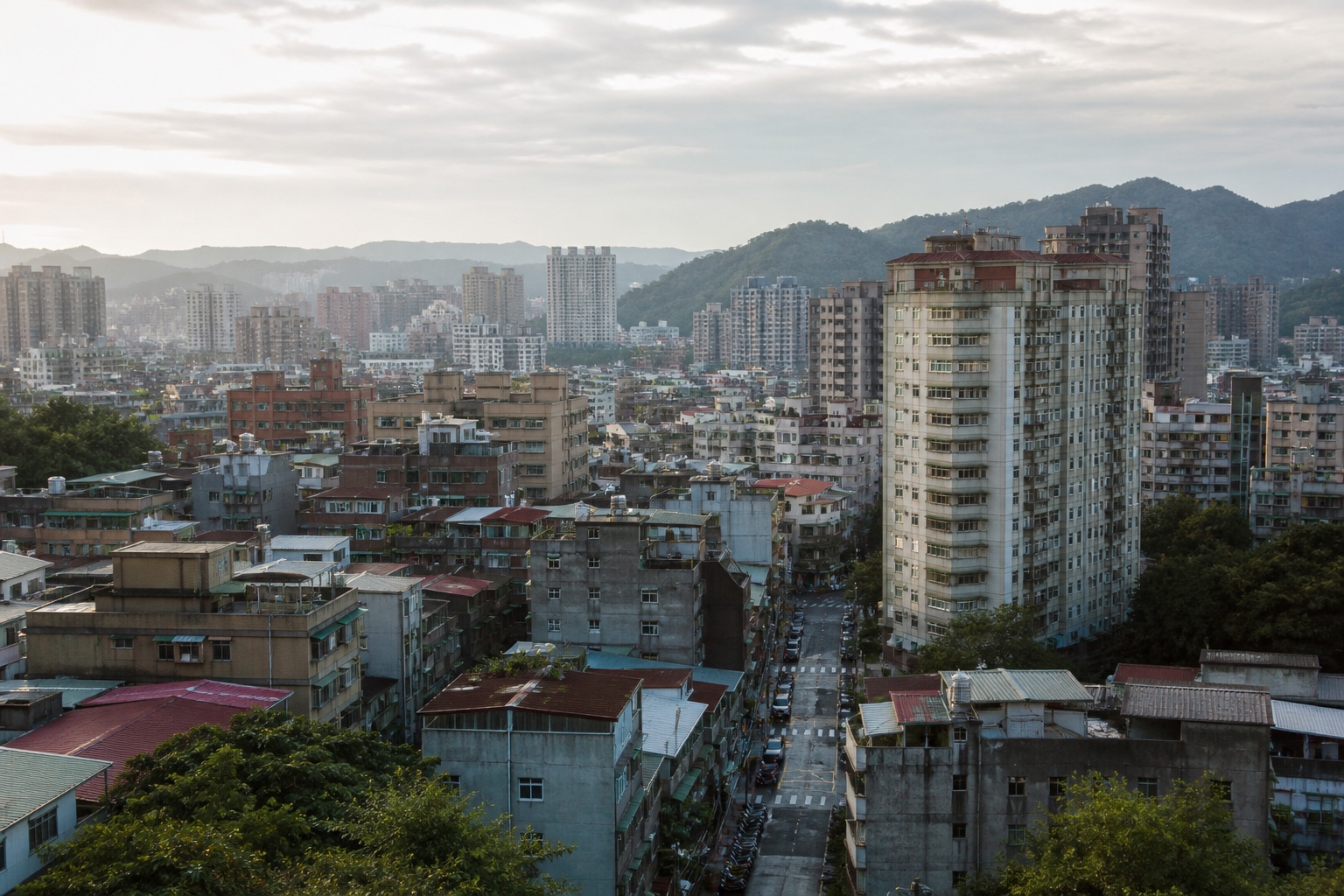
July 15, 2026
2026 Summer Market Notes: Tucheng, Banqiao, Zhonghe
The feel of this summer's market, how each neighborhood's rhythm differs, and what first-time buyers should keep in mind right now — these are Joanna's observations, not a market data report.
June 20, 2026
Buying Your First Home in Taiwan: A Step-by-Step Guide
From clarifying what you need and understanding actual price registration, to signing, financing, inspection, and handover — a complete walkthrough for buying your first home.
Curious about Zhonghe? Joanna will walk it with you.
You don't need to be 'ready' to reach out. Message Joanna anytime — buying, selling, or just trying to understand the market.